

Sustainable surgery: Why reusables are better for patients, budgets, and the planet
Article20 April 2026
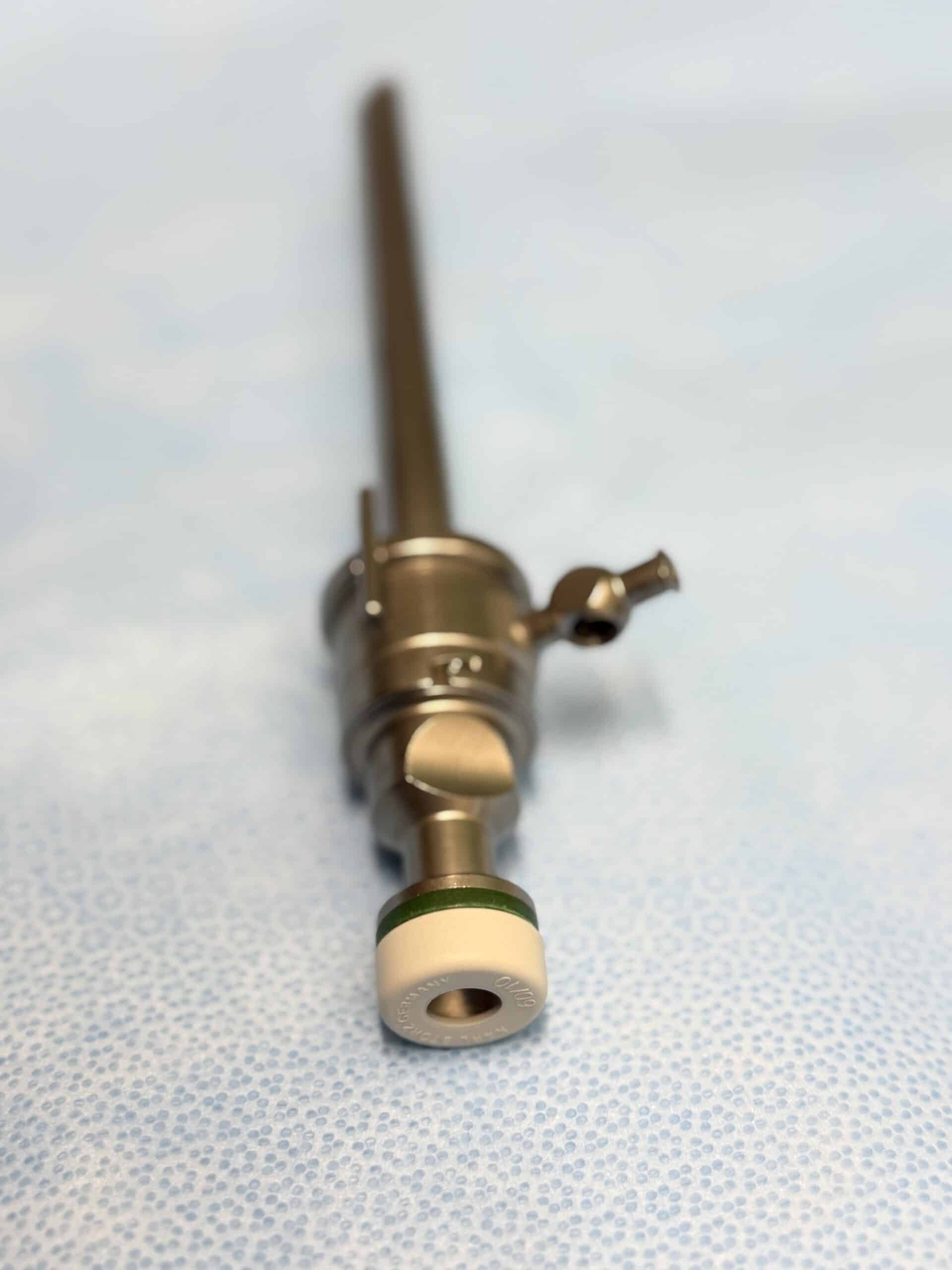
Modern surgical practice is undergoing a significant shift from traditional reusable instruments to single-use devices, often driven more by convenience and commercial factors than by clear clinical benefit. This article examines the financial and environmental consequences of that transition, highlighting evidence that disposable instrumentation frequently increases both healthcare costs and carbon footprint without improving patient outcomes.
The traditional model of surgical practice
For generations, surgery was performed using durable, reusable instruments designed for repeated use, safe reprocessing, and repair over many years, forming the historical foundation of modern surgical practice.¹ Over the last two decades, this model has been progressively displaced by an expanding range of single-use surgical devices, often marketed as more convenient, efficient, or safer, despite limited evidence that disposability itself confers superior clinical outcomes.²–⁴
While some disposable devices are clearly necessary and appropriate, the increasing tendency toward single-use instrumentation as the default approach carries significant and often under-recognised financial and environmental consequences.¹,²
Operating theatres, waste, and system pressure
Operating theatres generate a disproportionate share of healthcare waste, contributing an estimated 20–33% of total hospital waste despite representing a relatively small proportion of hospital floor area.¹,² This waste burden is driven largely by single-use instruments, ports, extensive packaging, and pre-assembled disposable procedure packs.¹,¹⁰
At the same time, healthcare systems internationally are under increasing fiscal strain, with rapidly rising procedural costs necessitating closer scrutiny of resource utilisation.³ Surgical care now sits at the intersection of clinical quality, cost containment, and environmental responsibility, and these domains can no longer be considered independently.¹
Commercial drivers and the rise of single-use surgery
The expansion of single-use surgery has been strongly influenced by commercial drivers rather than clinical necessity. Global market analyses consistently project ongoing growth in disposable surgical devices, supported by procurement incentives, bundled contracts, and workflow arguments that favour convenience at the point of care.³,⁴
However, convenience during an individual operation often obscures the true life-cycle cost of these devices. Manufacturing, packaging, international transportation, and disposal of complex medical instruments after a single use all contribute substantially to their environmental footprint.¹,¹⁰
Environmental impact: evidence from life-cycle assessment
Life-cycle assessment studies provide robust evidence that single-use laparoscopic instruments are associated with substantially greater environmental impact than reusable alternatives.⁵,¹⁰ A Swedish study comparing disposable, reusable, and mixed trocar systems for laparoscopic cholecystectomy demonstrated that disposable trocar systems produced almost four times the climate change impact and significantly greater resource depletion compared with reusable systems, while also being approximately twice as costly overall.⁵
This analysis quantified a difference of 446 kg of carbon dioxide equivalent per 500 procedures attributable to trocar choice alone, equating to approximately 0.9 kg of carbon dioxide equivalent per laparoscopic cholecystectomy.⁵
Similar findings have been reported in other settings. A UK-based assessment and costing study examining laparoscopic cholecystectomy instruments, including ports, scissors, and clip appliers, found that hybrid instruments incorporating reusable components reduced carbon footprint by approximately 76%, saving around 5.4 kg of carbon dioxide equivalent per operation.⁶ Importantly, this reduction in environmental impact was accompanied by a greater than 50% reduction in life-cycle cost compared with fully single-use instruments.⁶
Collectively, these studies demonstrate that the dominant contributors to environmental harm are manufacturing and disposal processes rather than sterilisation and reprocessing.¹,⁵,⁶
Financial impact: disposable does not mean cheaper
The financial consequences of single-use instrumentation closely mirror the environmental findings. Multiple cost analyses have demonstrated that disposable laparoscopic instruments can cost several times more per case than reusable alternatives.⁷,⁸ Contemporary analyses have shown disposable instruments costing up to nine times more per procedure, while earlier studies reported cost differentials ranging from seven-fold to over twenty-five-fold depending on the configuration used.⁷,⁸
Although reusable instruments incur costs related to cleaning, sterilisation, tracking, and maintenance, these costs are consistently shown to be small in comparison with the repeated purchase and disposal of single-use devices.⁶–⁸
A New Zealand example: laparoscopic cholecystectomy port costs
These issues are directly relevant to the New Zealand private hospital context. In my own practice reusable laparoscopic ports are owned by the hospitals, and typical port configurations for laparoscopic cholecystectomy are either 10–5–5–5 or 10–10–5–5.
Using published pricing from a Society of American Gastrointestinal and Endoscopic Surgeons cost analysis and converting to New Zealand dollars, the disposable port cost for a single laparoscopic cholecystectomy is approximately NZ$356 for a 10–5–5–5 configuration and approximately NZ$399 for a 10–10–5–5 configuration.⁹
By comparison, the capital cost of a reusable port set for these configurations is approximately NZ$3,300–3,470.⁹ Assuming a conservative lifespan of 200 uses, the amortised capital cost per case is approximately NZ$16–17. When a realistic sterile processing allowance of approximately NZ$30 per case is added, the total per-case cost for reusable ports is approximately NZ$46–47.⁶–⁹
This represents a saving of approximately NZ$309 per case for a 10–5–5–5 configuration and approximately NZ$352 per case for a 10–10–5–5 configuration. At an annual volume of 300 laparoscopic cholecystectomies, this equates to savings of approximately NZ$93,000–106,000 per year from port choice alone.⁹ Break-even for reusable ports occurs after fewer than ten cases.⁹
Waste beyond the theatre bin
Beyond direct financial cost, single-use instruments contribute substantially to both visible theatre waste and a much larger upstream environmental burden.¹,¹⁰ Raw material extraction, energy-intensive manufacturing, international transport, and high-energy disposal processes all contribute to the true environmental cost of disposable surgical devices.¹,¹⁰
Reducing reliance on single-use instrumentation therefore addresses not only the waste generated within operating theatres but also the hidden carbon footprint embedded within global supply chains.¹
Professional responsibility and sustainable surgical practice
Surgeons have a responsibility not only to individual patients but also to stewardship of healthcare resources and consideration of the long-term environmental consequences of clinical decisions.¹ In an era of escalating healthcare costs and increasing awareness of climate change, defaulting to reusable instruments where clinically safe and appropriate represents both fiscal responsibility and ethical practice.¹,⁵–⁸
In my own surgical practice, I make every effort to prioritise reusable equipment whenever possible. The available evidence demonstrates that this approach supports high-quality surgical care while simultaneously reducing cost and environmental harm. Sustainable surgery is therefore not about compromise, but about applying the same evidence-based rigour to environmental and financial stewardship as is already applied to clinical outcomes.¹
References
- MacNeill AJ, Hopf H, Khanuja A, Alizamir S, Bilec MM, Eckelman MJ, et al. Transforming the medical device industry: Road map to a circular economy. Health Aff (Millwood). 2020;39(12):2088-2097.
- Wyssusek KH, Keys MT, van Zundert AAJ. Operating room greening initiatives—the old, the new, and the way forward: A narrative review. J Hosp Adm. 2016;5(3):72-79.
- Global Market Insights. Disposable surgical devices market size report, 2023–2032.
- McKinsey & Company. Healthcare sustainability and the medical device supply chain. 2022.
- Karlsson M, Rogmark P, Lindgren P. Environmental impact comparison of disposable and reusable trocars in laparoscopic surgery. Surg Endosc. 2019;33:2854-2863.
- Rizan C, Reed M, Bhutta MF. Environmental impact and life cycle cost of reusable versus single-use laparoscopic instruments. BMJ Open. 2022;12:e054553.
- Adams SD, Cotton BA, McClure AM, McClure MJ. Reusable versus disposable laparoscopic instruments: A cost comparison. JSLS. 2018;22(1):e2017.00075.
- van Wagensveld BA, van Geldere D, Kouwenhoven EA, Tollenaar RAEM, Gouma DJ. Economic evaluation of reusable versus disposable laparoscopic instruments. Surg Endosc. 1998;12:115-120.
- Society of American Gastrointestinal and Endoscopic Surgeons. Cost savings analysis of reusable versus disposable trocars. SAGES abstract and clinical review.
- Thiel CL, Eckelman M, Guido R, Huddleston M, Landis AE, Sherman J. Environmental impacts of surgical procedures: Life cycle assessment of laparoscopic cholecystectomy. J Clean Prod. 2015;95:1-10.